Kindred
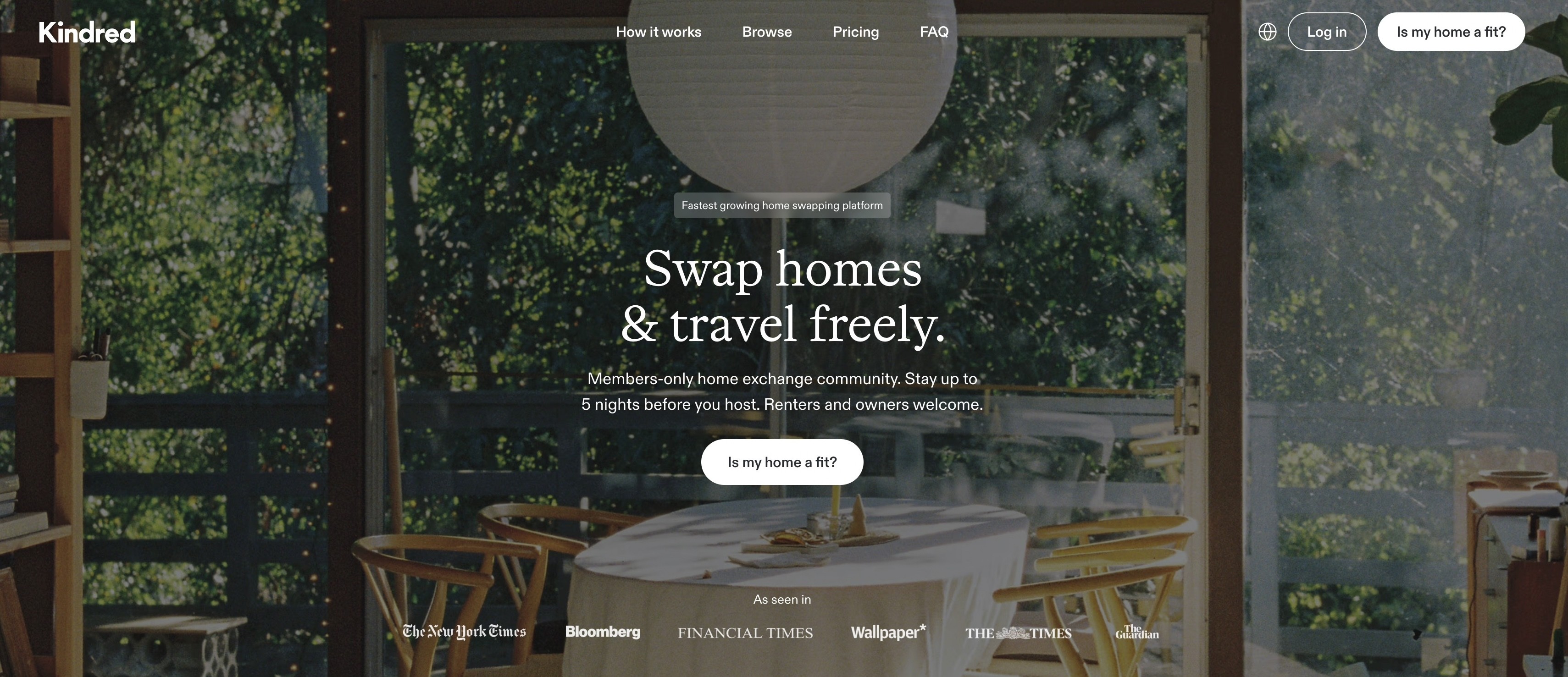
While working with Scout Lab as a creative director of copy and strategy, I crafted Kindred's brand verbal identity, brand strategy, campaign concepts — out of home, website copy and content design, paid social and organic ad copy concepts, and copy guidelines.
The strategic brief for Kindred's launch wasn't just to introduce a new travel platform — it was to introduce a new category. Kindred's model is fundamentally different from short-term rental marketplaces: a members-only home-swapping network built on reciprocity, where no money changes hands between hosts and guests, and where over 90% of homes are primary residences. Positioning it as an Airbnb alternative would have been a category error and a liability. The regulatory environment around short-term rentals is hostile in most major cities for good reason: platforms like Airbnb have demonstrably worsened housing shortages and displaced long-term residents. Kindred doesn't do that. But saying "we're not Airbnb" is a losing frame. The strategic challenge was to make Kindred's model so legible and compelling in its own right that the comparison became irrelevant.
The verbal identity and campaign work was built around a single distinction: renting versus residing. When you stay in a Kindred home, you're not a customer extracting value from someone's asset — you're a member of a reciprocal community, staying in someone's actual life while they stay in yours. That shift from transaction to exchange changes everything: the register of the copy, the emotional frame of the advertising, the way the platform talks about hosts and guests, the implicit values baked into every call to action. The audience — what we defined as conscious travelers — weren't looking to be lectured about housing markets; they were looking for a way to travel that matched their values without sacrificing quality or experience. The language had to carry that double weight: principled without being preachy, aspirational without obscuring the ethics.
Kindred has since grown to 300,000 members across 150+ cities and raised $125M, establishing home-swapping as a mainstream travel category — a third option, as their CEO now describes it, alongside hotels and short-term rentals.